


CAS 7440-05-3 Pd nanopowder Ultrafine Palladium as catalyst
Size:20-30nm Purity:99.95% CAS No:7440-05-3 ENINEC No.:231-115-6 Appearance:black Powder Shape:spherical

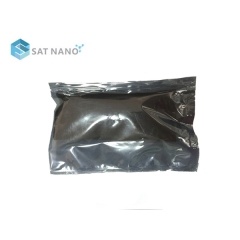
Size:20-30nm Purity:99.95% CAS No:7440-05-3 ENINEC No.:231-115-6 Appearance:black Powder Shape:spherical
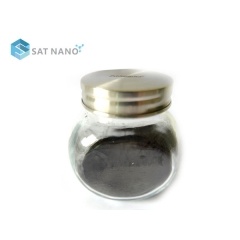
We can supply different size products of niobium silicide powder according to client's requirements. Size:1-3um; Purity:99.5%;Shape:granular CAS No:12034-80-9;ENINEC No.:234-812-3
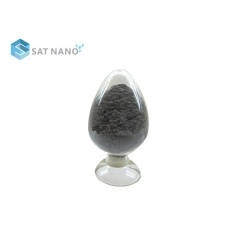
Ni2Si particle,99.5% purity,granular shape,is used for Microelectronic integrated circuit, nickel silicide film,etc. Size:1-10um; CAS No:12059-14-2;ENINEC No.:235-033-1
Carbon nanotubes (CNTs) are the most ideal functional fillers for heat dissipation applications. Known as the darkest substance in the world, CNTs is close to 1, and is one of the best thermal materials in the world. Compared with granular heat-dissipating fillers, fibrous CNTs are more likely to form a heat-conducting network in the coating, which has a significant strengthening and toughening effect on the coating, achieving thin coating, reducing thermal resistance, and exerting the best performance.
CNTs water-based heat-dissipating coating is formed on the surface of electronic components by spraying. It has uniform heat, low thermal resistance and high thermal radiation coefficient, which enhances heat dissipation of metal substrate. However, due to its small size and light weight, the electronic components in the mobile phone have low production efficiency and high cost.
The development of automation equipment, especially the emergence of high-precision automatic screen printing equipment, not only can achieve automatic printing, but also can customize the graphics, accurately control the thickness of the printing coating, precision <1um, which provides a large-scale application of CNTs for mobile phone cooling. feasibility.
SAT NANO successfully applied the water-based ink technology to the surface of the metal strip through the silk screen process to coat the surface of the metal strip with CNTs heat-dissipating coating, so that the metal materials such as white copper/stainless steel/tin iron have excellent heat dissipation performance, and the measured emissivity of the coating is greater than 0.98. Focus on level 0, pencil hardness 3-4H, no change in performance after 100 ° C / 200 hours of aging. With the advent of carbon nanotube water-based heat-dissipating inks, heat-dissipating engineers have been able to solve the pain points that cannot be solved by heat-conducting and heat-reducing materials, and have designed subversive products. At present, first-line mobile phone brands have been applied in large quantities in shields and LED backlights, and many brands are designing and verification.
The mobile phone/tablet has multiple RF devices and antennas. The electromagnetic waves cause crosstalk to high-speed semiconductor devices such as CPU/DRAM/FLASH. The shield is made of metal (copper white/stainless steel/tinplate) printed with carbon nanotube heat-dissipating ink. The coating emits heat from the heat generated by the electronics under the shield to ensure stable operation of critical components for a long time. The shielding cover printed with the carbon nanotube heat-dissipating ink does not need to open the vent hole to dissipate heat, and the shielding performance is maximized, and the mutual interference problem of the frequency device is solved. The shield cover for printing carbon nanotube heat-dissipating ink supports fully automatic PCBA board (wave soldering/reflow soldering temperature zone test has passed), and the manufacturer omits the process of manually bonding graphite sheets, reducing costs and greatly improving production efficiency.
Mobile phone backlights (LEDs) generate high heat when working. The traditional solution is to use graphite sheets for heat dissipation. The new design concept is to use the high-radiation properties of carbon nanotube coatings to radiate heat from the front of the screen to the convection in the air. . And the research data shows that the carbon nanotube coating has a low specular reflectance of 2.6% and a low diffuse reflectance of 0.1%, which can be used for the shading of the LED back frame.
The whole mobile phone transmits and transfers the heat energy generated by the device through the shield cover printing, the middle frame/bottom shell spraying/printing carbon nanotube heat-dissipating ink, etc., and greatly improves the user experience.
The carbon nanotube coating has both heat dissipation and static dissipation (coating surface impedance 107-108). When the structure of the mobile phone is designed, the static electricity can be guided to dissipate the coating to ensure the safety of the human body and reduce the impact of static electricity on the product device.
The copper foil for printing carbon nanotube heat-dissipating ink has the functions of heat conduction, heat dissipation, radiation dissipation, static dissipation, electromagnetic shielding, etc., and the carbon nanotube heat-dissipating copper foil can be bent, the pattern can be customized, the die-cutting process is simple, and the straight-through rate is matched. High, can completely replace the artificial graphite sheet heat conductive material.


 online service
 13929258449
 admin@satnano.com
 + 8613929258449