


CAS 7440-05-3 Pd nanopowder Ultrafine Palladium as catalyst
Size:20-30nm Purity:99.95% CAS No:7440-05-3 ENINEC No.:231-115-6 Appearance:black Powder Shape:spherical

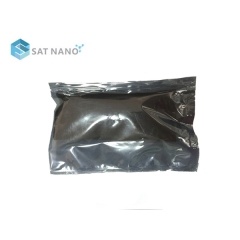
Size:20-30nm Purity:99.95% CAS No:7440-05-3 ENINEC No.:231-115-6 Appearance:black Powder Shape:spherical
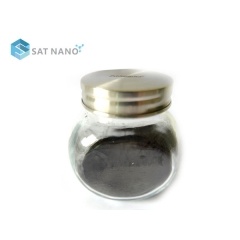
We can supply different size products of niobium silicide powder according to client's requirements. Size:1-3um; Purity:99.5%;Shape:granular CAS No:12034-80-9;ENINEC No.:234-812-3
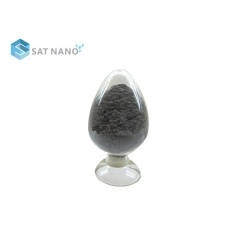
Ni2Si particle,99.5% purity,granular shape,is used for Microelectronic integrated circuit, nickel silicide film,etc. Size:1-10um; CAS No:12059-14-2;ENINEC No.:235-033-1
Carbon nanotubes powder, as one of the strongest structural materials in theory, can achieve mechanical properties of hundreds of GPa level strength and TPa level modulus per single strand. However, the realization of such outstanding performance in macroscopic materials always faces the "scale paradox": the strength of macroscopic carbon nanotube fibers or structural components is much lower than the theoretical value of a single CNT, because the nanotubes that make up these structures generally have insufficient length, uneven arrangement, and structural defects, and the connection method often relies on weak shear forces. Although various strategies have been attempted to enhance connections through covalent bonding repair or energy beam welding, they all face bottlenecks such as structural damage, high costs, or complex operations that are difficult to engineer. Recently, Professor Wei Fei's team from Tsinghua University jointly proposed and experimentally verified a Van der Waals welding method based on TiO ₂ nanoparticles, which achieved almost non-destructive macroscopic CNT welding at normal pressure and room temperature for the first time. The joint strength is close to the theoretical limit of a single CNT, marking another key breakthrough in the "transition from experimental to engineering" of carbon nanomaterials.
This technology is based on the Fast Chemical Vapor Deposition Self Assembly (FCVDS) process, which can accurately deposit nano-sized TiO ₂ particles onto the overlapping area of CNT bundles in just a few seconds, serving as a "nano brazing material". Unlike traditional welding that relies on atomic diffusion or high-temperature covalent reconstruction, this method purely relies on van der Waals forces and interface friction to achieve connection, thus avoiding damage to the tube wall structure caused by high-energy beam irradiation or excited state generation. More importantly, by designing deposition parameters and particle size distribution reasonably, effective welding can be achieved with only about 1 wt% of "brazing material", maximizing the preservation of CNT's original low-density advantage. This lightweight welding method provides a practical and feasible engineering implementation path for carbon nanotubes in fields such as aerospace, military, and flexible structural materials that are extremely sensitive to comparative strength in the future.
This study not only proposes a new CNT welding technology that combines strength preservation, structural integrity, weight control, and operational feasibility, but also comprehensively demonstrates the strategy from mechanical mechanisms, parameter models, to engineering experiments. While achieving non-destructive amplification of the mechanical properties of carbon nanotubes, it provides key technical support for applications such as high-strength fiber materials, flexible devices, and extreme structural components. In the future, if this method can be linked with industrial grade CVD CNT macroscopic preparation technology, it is expected to promote the transition of high-strength carbon nanostructured materials from the laboratory to the industrial end, empowering the performance leap of the next generation of aerospace, defense composite materials and flexible structural devices.
SAT NANO is one of the best supplier of carbon nanotube powder in China, we can supply SWCNT, DWCNT and MWCNT powder and other customed carbon nanotube powder, if you have any enquiry, please feel free to contact us at admin@satnano.com


 online service
 13929258449
 admin@satnano.com
 + 8613929258449