


CAS 7440-05-3 Pd nanopowder Ultrafine Palladium as catalyst
Size:20-30nm Purity:99.95% CAS No:7440-05-3 ENINEC No.:231-115-6 Appearance:black Powder Shape:spherical

Size:20-30nm Purity:99.95% CAS No:7440-05-3 ENINEC No.:231-115-6 Appearance:black Powder Shape:spherical
We can supply different size products of niobium silicide powder according to client's requirements. Size:1-3um; Purity:99.5%;Shape:granular CAS No:12034-80-9;ENINEC No.:234-812-3
Ni2Si particle,99.5% purity,granular shape,is used for Microelectronic integrated circuit, nickel silicide film,etc. Size:1-10um; CAS No:12059-14-2;ENINEC No.:235-033-1
In the explosive growth of new energy vehicles, energy storage power stations, consumer electronics and other fields, the "heart" of lithium batteries - the particle size of active materials - is becoming the core password that determines battery performance. From Tesla 4680 battery to CATL Kirin battery, from lithium iron phosphate to ternary positive electrode, the micrometer level adjustment of material particle size directly affects the charging and discharging speed, cycle life, and even safety boundary of the battery.
Why are tech giants chasing the nanoscale?
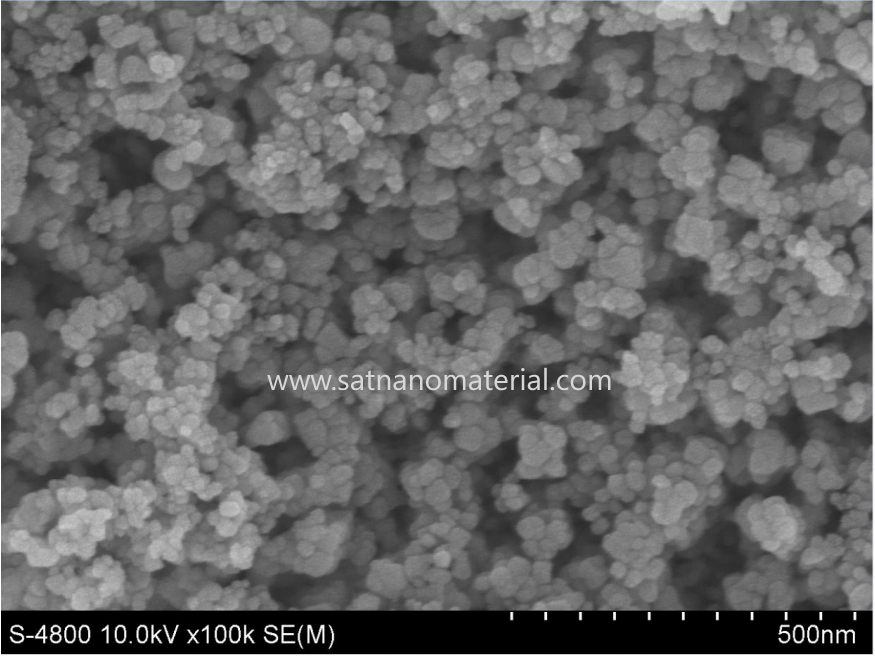
According to Fick's law, the diffusion time of lithium ions inside a particle is proportional to the square of the particle radius. Nanoscale particles (<100nm) shorten the diffusion path of lithium ions to 1/10 of that of micrometer sized particles, significantly reducing solid-phase diffusion resistance. For example, after reducing the size of lithium iron phosphate (LiFePO ₄) particles from 5 μ m to 100nm, the ion conductivity increases threefold, supporting high rate charging and discharging above 10C; ·The ternary cathode material (NCM) adopts nanoscale primary particle aggregates, which can maintain 85% capacity at a high temperature of 45 ℃.
2. The "dense network" of electronically conductive particles forms denser contact points in the electrode, theoretically improving the efficiency of electron conduction. Experimental data shows that the contact area of nanoscale lithium cobalt oxide (LiCoO ₂) particles increases by 40%, and the electrode resistance decreases by 25%; ·In the carbon nanotube composite negative electrode, the contact point density between nano silicon particles and conductive agent is increased by three times, and the efficiency exceeds 90% for the first time.
3. The "disruptor" of low-temperature performance exhibits faster lithium-ion deintercalation kinetics of nanoscale particles in a -20 ℃ low-temperature environment. According to actual testing of a certain brand of electric vehicles, batteries using nano positive electrodes can still release 85% of their capacity at -15 ℃, while traditional materials can only release 60%.
4. The small particle size of the "counterattacker" of cycle life can alleviate the concentration stress gradient during deep charging and discharging. According to data from Ningde Times Laboratory, the capacity retention rate of nano ternary materials reaches 82% after 3000 cycles, which is 15% higher than that of micron level materials.
Small particle size 'fatal injury': how to solve the three major hidden dangers?
1. Agglomeration phenomenon: The high specific surface area (up to 100m ²/g) of nanoparticles from the "efficient channel" to the "island of death" leads to a significant increase in surface energy, making agglomeration highly likely to occur. For example, after the aggregation of nano lithium iron phosphate in the slurry, 20 μ m sized pores appear on the coated electrode, resulting in a threefold increase in local current density; ·An investigation into an energy storage power plant accident showed that the agglomeration of positive electrode materials caused an internal short circuit, and the temperature soared to 300 ℃, triggering heat loss. Solution: Surface coating technology: Coating nanoparticles with carbon layers or oxides to reduce surface energy; ·Dispersant optimization: Non ionic dispersants are used to control the viscosity of the slurry below 6000mPa · s.
2. Side reaction storm: The contact area between the "combustion bomb" nanoparticles in the nanoscale and the electrolyte increases by 10 times, leading to: · Electrolyte decomposition: Nanoparticles catalyze electrolyte oxidation at high temperatures, resulting in a 5-fold increase in gas production; ·Metal ion dissolution: Nano scale nickel cobalt manganese oxide lithium (NCM) has a metal dissolution rate of 0.3%/cycle at a high voltage of 4.5V, which is twice as high as that of micron scale materials. Solution: · Electrolyte additives: Introduce film-forming additives such as FEC (fluorinated vinyl carbonate) to suppress side reactions; ·Voltage window optimization: Reduce the charging cut-off voltage from 4.3V to 4.2V, and increase the cycle life by 40%.
3. Process nightmare: The large-scale production of nanomaterials from the "nano dream" to the "mass production pit" faces three major challenges: dispersion difficulty: requiring the use of high shear sand mills, which consume three times more energy than micron sized materials; ·Testing cost: The frequency of laser particle size analyzer testing needs to be increased to 3 times per batch, resulting in a 50% increase in cost; ·Equipment wear: Nanoparticles increase the wear rate of zirconia beads in sand mills by 10 times, and the maintenance cycle is shortened to 72 hours. Solution:
·Dry granulation: Pre agglomerate nanoparticles into micrometer sized secondary particles, balancing performance and process; ·Online detection: Introducing Process Analysis Technology (PAT) to monitor particle size distribution in real-time.
Nano particle size, is it the endpoint or the starting point? Small particle materials are like a double-edged sword, endowing batteries with extraordinary performance while also posing challenges in terms of craftsmanship and safety.
SAT NANO is a best supplier of nano powder and micron particle in China, we can offer copper powder ,silicon powder and other products for batteries usage. If you have any enquiry, please feel free to contact us at admin@satnano.com


 online service
 13929258449
 admin@satnano.com
 + 8613929258449