


CAS 7440-05-3 Pd nanopowder Ultrafine Palladium as catalyst
Size:20-30nm Purity:99.95% CAS No:7440-05-3 ENINEC No.:231-115-6 Appearance:black Powder Shape:spherical

Size:20-30nm Purity:99.95% CAS No:7440-05-3 ENINEC No.:231-115-6 Appearance:black Powder Shape:spherical
We can supply different size products of niobium silicide powder according to client's requirements. Size:1-3um; Purity:99.5%;Shape:granular CAS No:12034-80-9;ENINEC No.:234-812-3
Ni2Si particle,99.5% purity,granular shape,is used for Microelectronic integrated circuit, nickel silicide film,etc. Size:1-10um; CAS No:12059-14-2;ENINEC No.:235-033-1
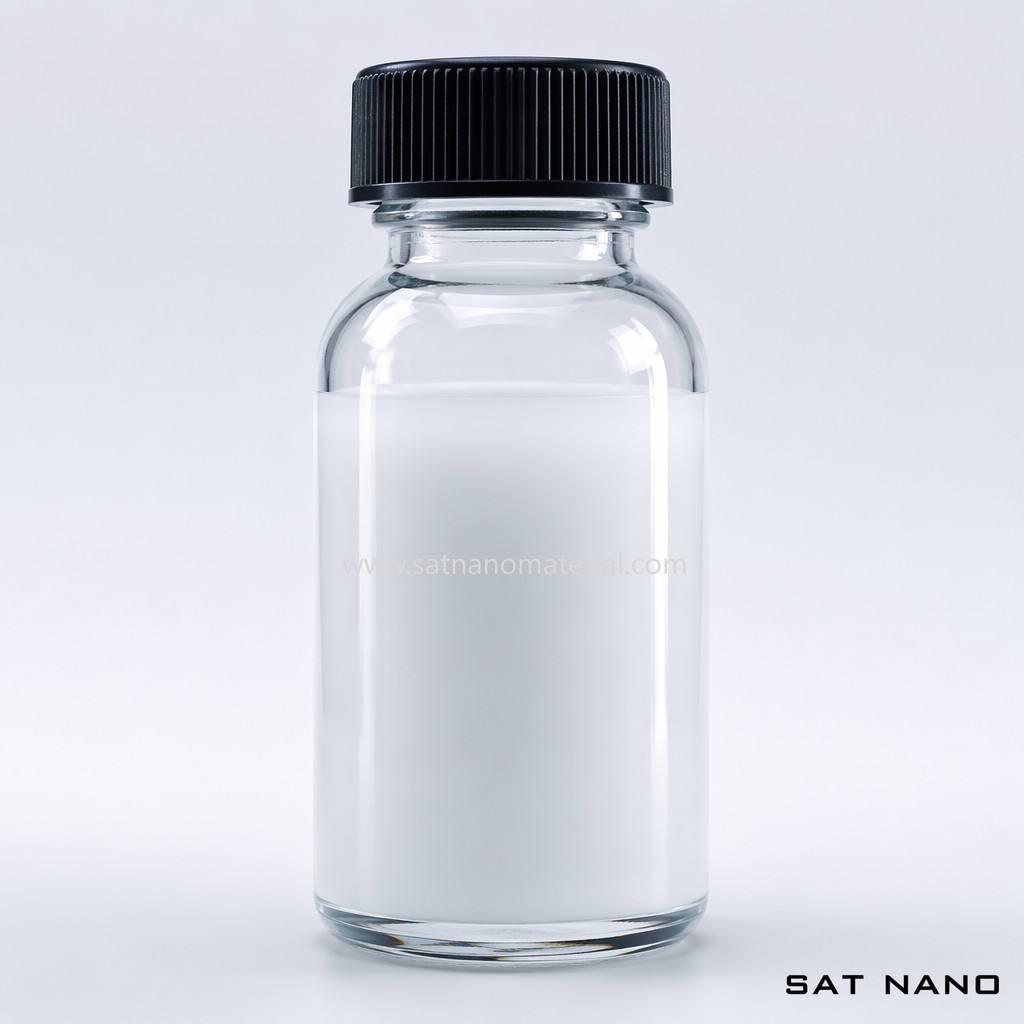
Last week, SAT NANO successfully completed an export order to the South Korean market — delivering 1KG of aqueous nano titanium dioxide (TiO₂) dispersion to a Korean company specializing in photocatalytic environmental remediation. The batch has been shipped via FedEx International Priority for the client's photocatalytic material R&D and pilot-scale testing.
Nano titanium dioxide (TiO₂) is widely recognized as the most practically valuable photocatalyst — with a bandgap of approximately 3.0–3.2 eV, UV light excitation generates highly oxidative electron-hole pairs capable of efficiently degrading organic pollutants, killing bacteria, and decomposing harmful gases.
However, the real-world photocatalytic efficiency of nano TiO₂ depends on far more than just particle size and crystal phase. Dispersion quality is the true deciding factor:
|
Issue |
Consequences of Raw Powder Use |
SAT NANO Dispersion Advantage |
|
Agglomeration |
Nanoparticles spontaneously agglomerate due to high surface energy; effective specific surface area plummets, severely reducing photocatalytic activity |
Dispersion process is completed before shipment; particles remain stably suspended in monodisperse or micro-agglomerated states |
|
Sedimentation |
Rapid settling in aqueous systems; cannot achieve uniform coating or injection into reactors |
Proprietary dispersant and stabilizer package ensures no visible phase separation after 6 months at ambient storage |
|
Uncontrolled Concentration |
End-user self-formulation leads to fluctuating solids content, compromising experimental reproducibility |
Precisely controlled solids loading (customizable from 5%–40% w/w); batch-to-batch consistency guaranteed |
|
Occupational Safety |
Inhalation risk from nanopowder dust; requires PPE and containment |
Liquid form eliminates dust exposure — ready to use out of the bottle |
|
Parameter |
Specification |
||
|
Material |
Nano titanium dioxide (TiO₂) aqueous dispersion |
||
|
Crystal Phase |
Anatase / Rutile / Mixed-phase, customizable |
||
|
Primary Particle Size |
5–50 nm (customizable) |
||
|
Solids Content |
5%–40% w/w (customizable) |
||
|
Deionized water (organic solvent systems available) |
||
|
pH |
Neutral to mildly acidic (adjustable upon request) |
||
|
Zeta Potential |
≥ ±30 mV (indicating excellent dispersion stability) |
||
|
Appearance |
Milky translucent to milky white suspension |
||
|
Packaging |
HDPE sealed bottle / drum, light-protected and leak-proof |
TiO₂ photocatalysis is at a critical tipping point — transitioning from academic research to large-scale industrialization. The global photocatalyst market reached $8.75 billion in 2025 and is projected to grow at a CAGR of 11.4%. Core application areas include:
Under UV excitation, nano TiO₂ efficiently degrades organic dyes, antibiotics, pesticide residues, and endocrine-disrupting compounds in water. As a global leader in semiconductor and electronics manufacturing, South Korea faces particularly acute demand for advanced industrial wastewater treatment. Suspension-type TiO₂ photocatalytic systems are widely adopted in reactor design owing to their large specific surface area and high mass transfer efficiency.
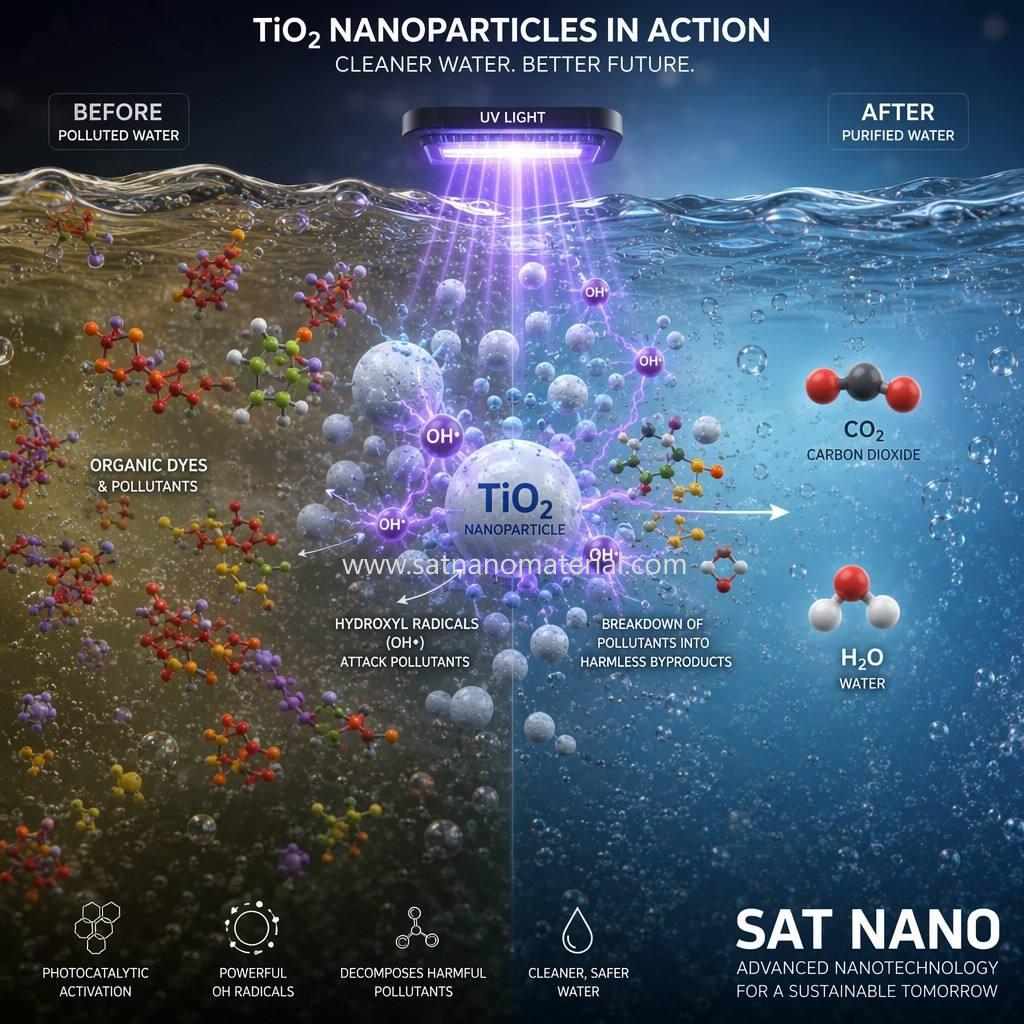
TiO₂ coatings decompose indoor formaldehyde, BTEX compounds, and NOₓ. Mature applications already exist in architectural coatings, air purifier filters, and road paving materials. South Korea's high urban density and stringent indoor air quality standards create a substantial market for TiO₂ photocatalytic coatings.
TiO₂'s photo-induced superhydrophilicity (water contact angle < 5° after UV irradiation) gives it unique advantages in self-cleaning glass, antibacterial ceramics, and medical device surface coatings.
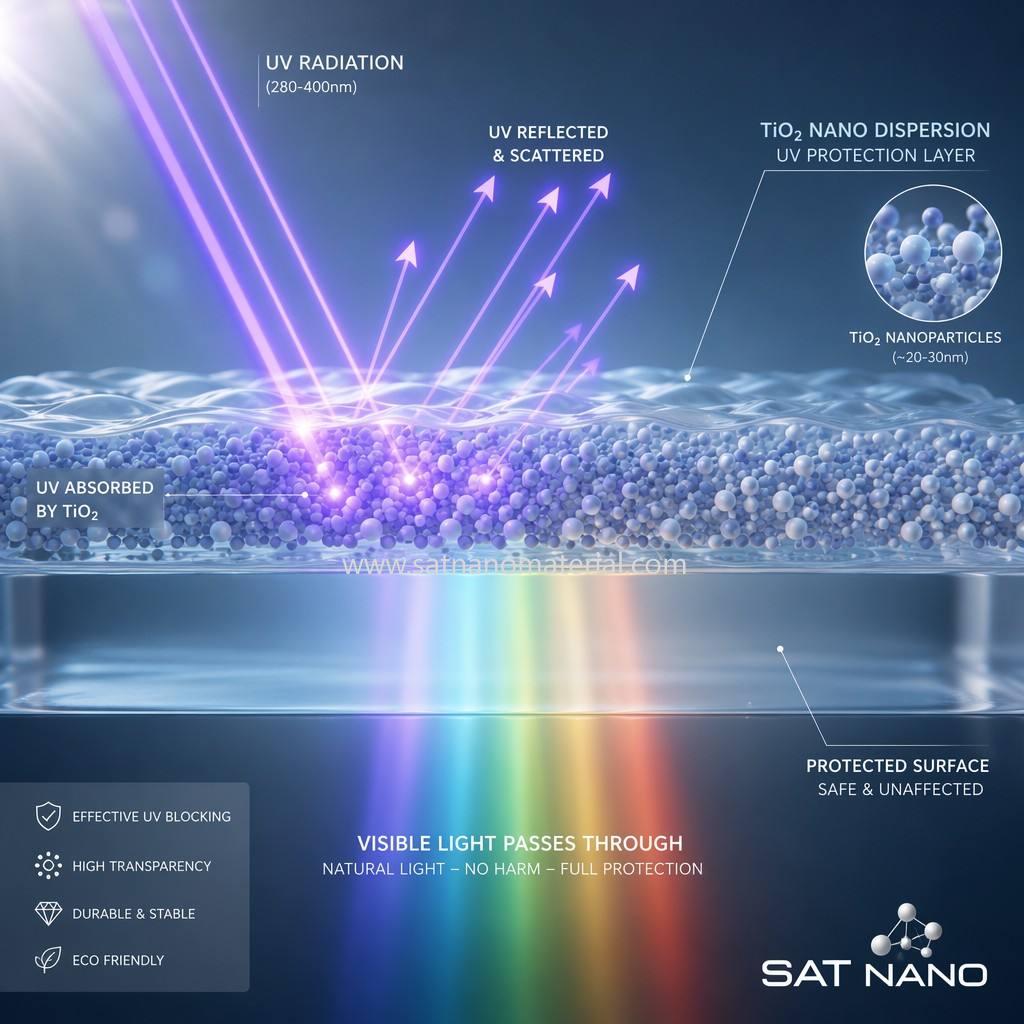
As the classic model catalyst for photocatalytic water splitting, TiO₂'s relatively wide bandgap historically limited its visible-light utilization. However, recent breakthroughs in doping (N-doping, metal deposition) and heterostructure engineering (TiO₂/g-C₃N₄, TiO₂/MXene) have significantly enhanced its visible-light activity.
SAT NANO's nano TiO₂ dispersion entering this market serves both as a validation of product quality and a foundation for future bulk supply partnerships.
Beyond TiO₂ dispersions, SAT NANO's nanopowder dispersion series includes:
|
Product |
Typical Applications |
||
|
Nano TiO₂ Dispersion |
Photocatalysis, self-cleaning coatings, UV shielding |
||
|
Nano SiO₂ Dispersion |
Coating hardening & abrasion resistance, precision polishing |
||
|
Nano ZnO Dispersion |
UV shielding, antibacterial textiles |
||
|
Nano Al₂O₃ Dispersion |
Thermal conductive fillers, sapphire polishing |
||
|
Transparent conductive films, thermal insulation coatings |
||
|
Nano Fe₃O₄ Dispersion |
Magnetic fluids, bioseparation, microwave absorbing materials |


 online service
 13929258449
 admin@satnano.com
 + 8613929258449