


CAS 7440-05-3 Pd nanopowder Ultrafine Palladium as catalyst
Size:20-30nm Purity:99.95% CAS No:7440-05-3 ENINEC No.:231-115-6 Appearance:black Powder Shape:spherical

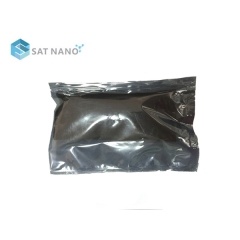
Size:20-30nm Purity:99.95% CAS No:7440-05-3 ENINEC No.:231-115-6 Appearance:black Powder Shape:spherical
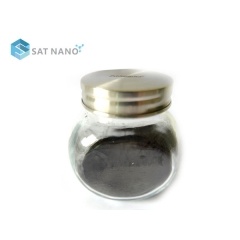
We can supply different size products of niobium silicide powder according to client's requirements. Size:1-3um; Purity:99.5%;Shape:granular CAS No:12034-80-9;ENINEC No.:234-812-3
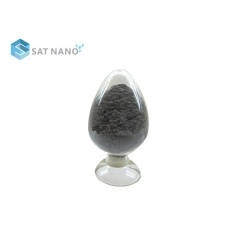
Ni2Si particle,99.5% purity,granular shape,is used for Microelectronic integrated circuit, nickel silicide film,etc. Size:1-10um; CAS No:12059-14-2;ENINEC No.:235-033-1
Carbon quantum dot CQDs, as environmentally friendly luminescent materials, typically exhibit high quantum yields under photoluminescence conditions. Traditional CQDs can achieve a photoluminescence quantum yield (PLQY) of over 80% in solution, but PLQY significantly decreases in solid-state thin films, resulting in LED devices based on CQDs being much lower in brightness and efficiency than heavy metal containing quantum dot devices. Developing novel CQDs that can enhance luminescence in the matrix has become a key challenge in promoting the development of the next generation of sustainable luminescence technologies.
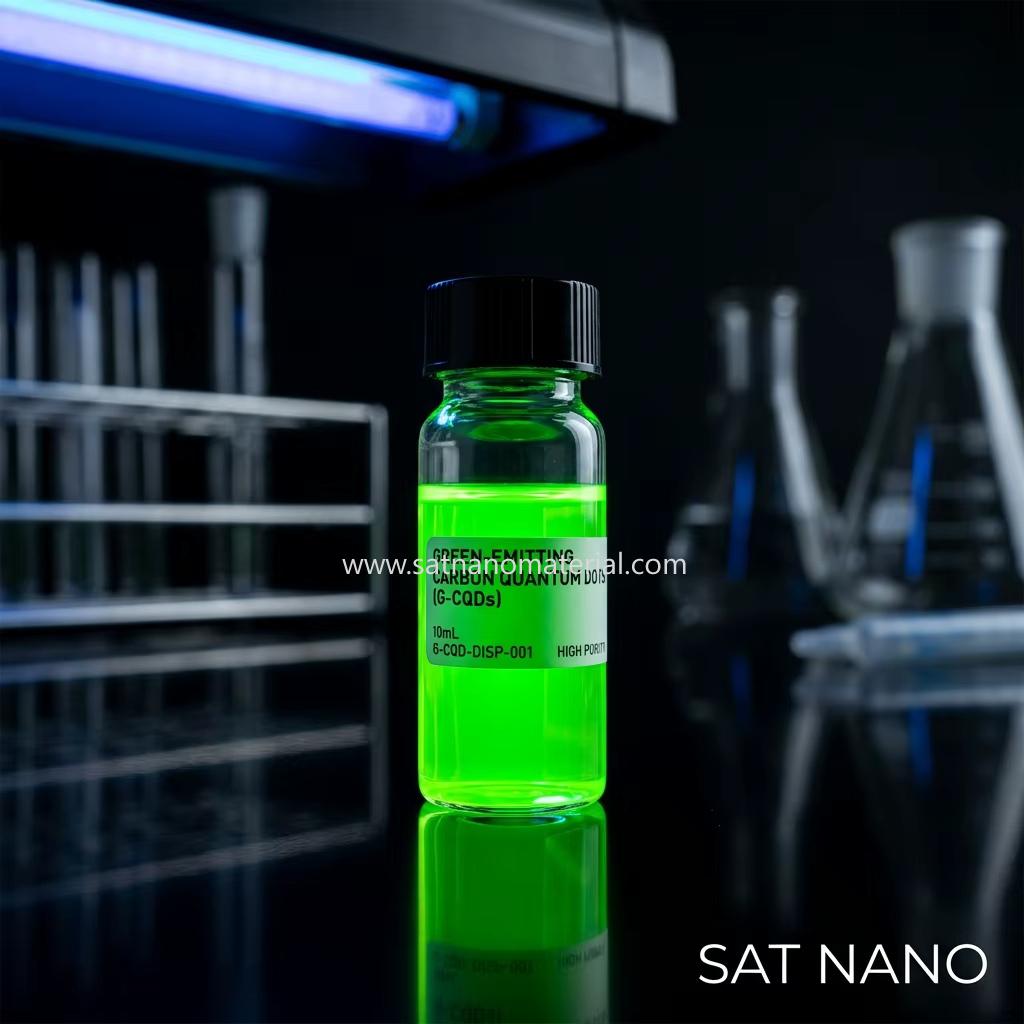
The journal Advanced Functional Materials reports that researchers have developed a novel class of carbon quantum dots MIE-CQDs with unprecedented matrix induced luminescence enhanced MIE effect through rational molecular engineering design. These MIE-CQDs were synthesized by solvothermal method under strong alkaline ethanol conditions using 2,5-dimethoxyphenyl-1,4-diformaldehyde DMDD and 2-naphthylacetonitrile as precursors.
Unlike conventional CQDs, MIE CQDs exhibit only 15% PLQY in dilute solution, but increase to 31% in solid powder. However, when dispersed in polymer matrices such as polymethyl methacrylate PMMA, their PLQY is significantly enhanced to over 70%. Through comprehensive structural, optical, and photophysical analysis, researchers have confirmed that the enhancement effect originates from restricted intramolecular motion in non planar structures, effectively suppressing non radiative recombination.
Based on the excellent solid-state luminescence performance of MIE CQDs, the research team has constructed a solution processed electroluminescent device. By doping MIE CQs into the thermally activated delayed fluorescence TADF material CzAcSF as the host matrix and combining PO-T2T as the electron transport layer, the device achieved efficient exciton collection and energy transfer.
The optimized LED emits at 510nm, with a maximum brightness exceeding 10000cd m-2, a current efficiency of 20cd A-1, and an external quantum efficiency EQE exceeding 7%, significantly breaking through the performance bottleneck of traditional fluorescent CQDs LEDs. In addition, the device constructed directly with MIE CQDs as the luminescent layer emitted at 603nm, achieving a high brightness of 8366cd m-2, setting a new record for the brightness of long wavelength CQDs LEDs.

This study provides an effective strategy for designing high-performance matrix induced luminescence enhanced carbon quantum dots, which is expected to promote the development of light-emitting diode technology.
Literature name: unprecedented Matrix-Induced Emission Enhancement Enables Bright and Efficient Carbon Quantum Dot-Based Electroluminescent Light-Emitting Diodes


 online service
 13929258449
 admin@satnano.com
 + 8613929258449