1. Structural Paradigm: The Inverse Spinel Advantage
Nickel Ferrite (NiFe2O4) stands as a premier magnetic semiconductor characterized by its inverse spinel crystal structure. In this configuration, Ni2+ ions reside in octahedral [B] sites, while Fe3+Fe3+ ions are split between tetrahedral (A) and octahedral [B] sites. This atomic arrangement facilitates strong superexchange interactions via oxygen bridges, resulting in high ferrimagnetic saturation and exceptional phase stability.
2. Critical Material Parameters
-
Eddy Current Suppression: With a high intrinsic electrical resistivity (ρ≈105−108 Ω⋅cm), NiFe2O4 effectively bypasses the skin effect and eddy current limitations that plague metallic micro-powders at high frequencies (MHz-GHz).
-
Thermal Robustness: Boasting a Curie temperature (TCTC) of ≈585∘C≈585∘C, NiFe2O4 maintains its magnetic integrity under extreme thermal loads where standard soft ferrites would transition to a paramagnetic state.
-
Impedance Tuning: Its moderate complex permeability (μrμr) and permittivity (εrεr) profiles allow for precision-engineered impedance matching (Zin≈Z0), ensuring maximum electromagnetic wave penetration and subsequent attenuation.
3. Mechanisms of EM Attenuation
Within the microwave absorption spectrum (C, X, and Ku bands), NiFe2O4 operates via:
-
Resonance Loss: Utilizing natural resonance and domain wall resonance to dissipate incident radiation.
-
Synergistic Damping: When integrated into polymer matrices, it acts as a magnetic loss regulator, balancing the overall dielectric/magnetic loss tangents to achieve Reflection Loss (RL) values exceeding -40 dB.
4. High-Value Application Verticals
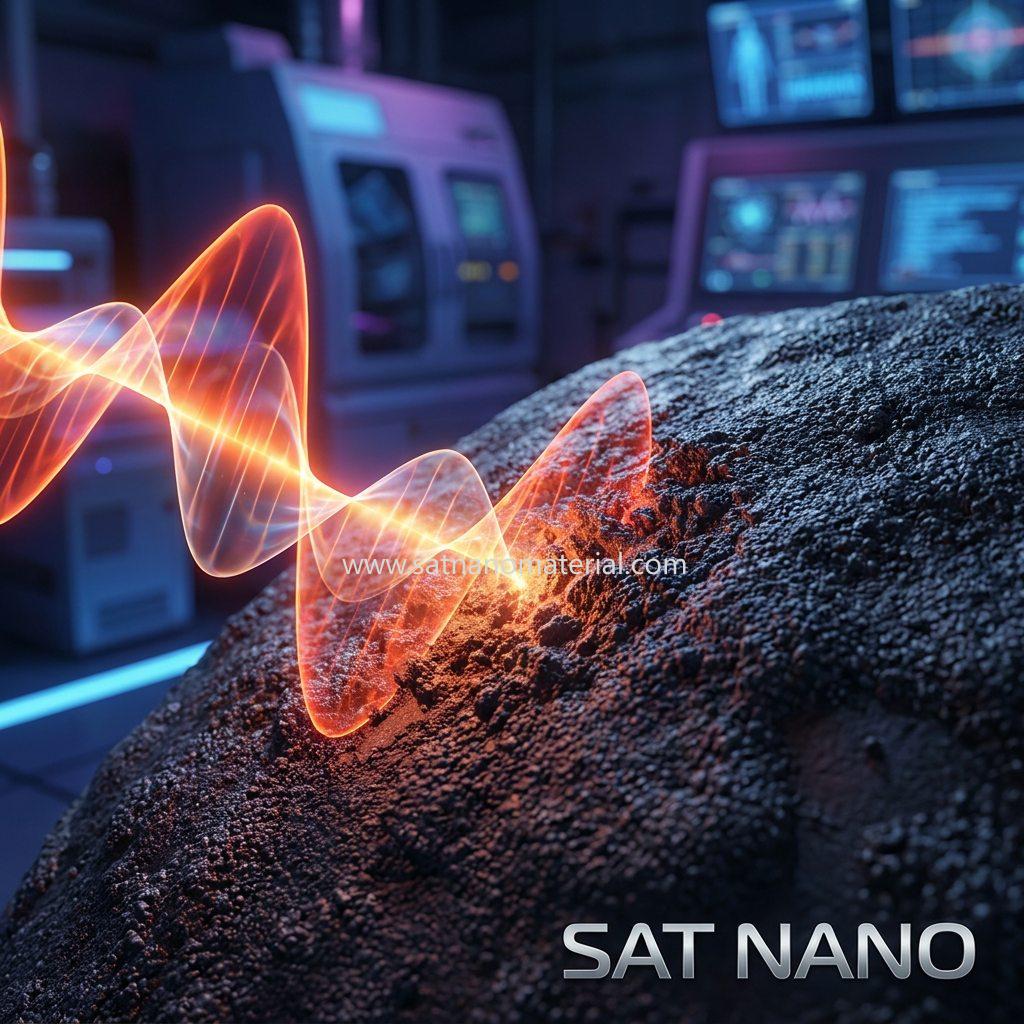
1.Aerospace & Defense: Developing thermally stable Radar Absorbing Materials (RAM) for hypersonic platforms and engine housing.
-
Unique Contribution of NiFe2O4:
-
High Thermal Stability: Its high Curie temperature (TC≈585∘C) ensures that the magnetic loss capability remains "online" even under extreme thermal loads.
-
Chemical Inertness: In high-temperature oxidizing atmospheres, it remains structurally stable and does not oxidize into non-magnetic phases, ensuring long-term mission reliability.
-
Engineering Implementation: It is typically composited with high-temperature ceramic matrices (such as SiC) to create High-Temperature RAM. This is applied to critical areas like engine nozzles, leading edges of wings, and missile radomes.
2.Telecommunications: Fabrication of ultra-high-frequency (UHF) circulators, isolators, and low-loss inductors for 5G/6G infrastructure.
-
Unique Contribution of NiFe2O4:
-
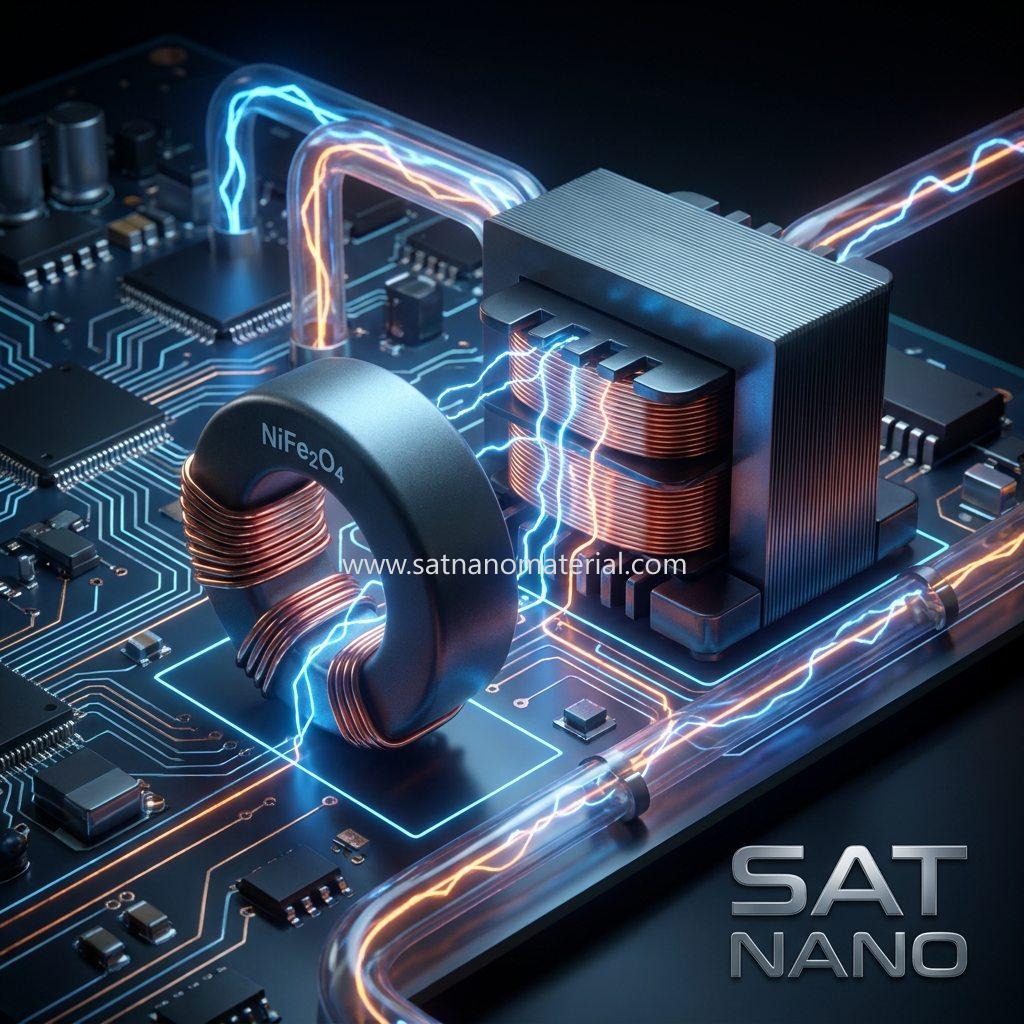
Guaranteed High Q-factor: Its exceptionally high electrical resistivity ensures that virtually no eddy current loss is generated in high-frequency alternating fields. This allows inductors to maintain high permeability while achieving a superior Quality Factor (Q).
-
Surpassing Snoek’s Limit: By controlling the nanostructure (e.g., flaky or anisotropic growth), the resonance frequency can be pushed into higher bands, meeting the wideband isolation requirements of 5G mmWave.
-
Engineering Implementation: Using NiFe2O4 powder in LTCC (Low-Temperature Co-fired Ceramic) technology to integrate magnetic components directly into multi-layer circuit boards, achieving highly integrated RF front-end modules.
3.Electrocatalysis: Leveraging the catalytic sites of the spinel lattice for Oxygen Evolution Reaction (OER) and sensing hazardous volatile organic compounds (VOCs).
-
nique Contribution of NiFe2O4:
-
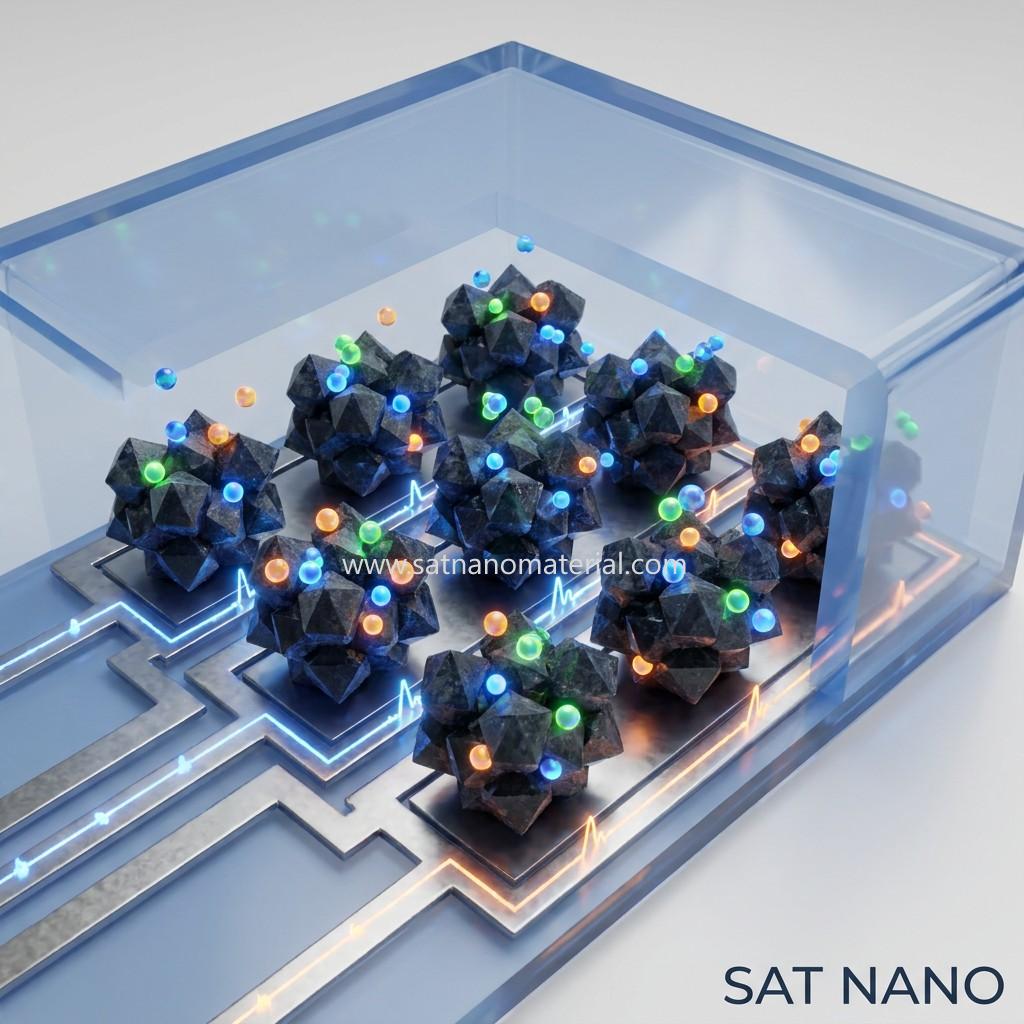
Synergistic Catalytic Effect: The synergistic interaction between NiNi and FeFe sites within the spinel lattice effectively lowers the overpotential of the OER, demonstrating catalytic activity comparable to noble metals.
-
Magnetic Recovery: As a heterogeneous catalyst, it can be easily recovered from the reaction medium using an external magnetic field, preventing catalyst loss and secondary pollution.
-
Engineering Implementation: Depositing nano-NiFe2O4 onto carbon cloth or nickel foam to construct high-performance, low-cost 3D electrocatalytic electrodes for hydrogen plants and high-sensitivity gas sensors (detecting Ethanol, H2SH2S, etc.).
4.Biotechnology: Advanced magnetic fluid hyperthermia (MFH) for targeted oncological therapies.
-
Unique Contribution of NiFe2O4:
-
Efficient Magneto-Thermal Conversion: Under an alternating magnetic field (AMF), nano-NiFe2O4 releases significant heat through hysteresis and relaxation losses, heating the tumor locally to 42∘C42∘C–45∘C—a temperature that induces apoptosis (cell death) in cancer cells.
-
Targeting & Low Toxicity: When modified with specific biological ligands, NiFe2O4 particles act like "guided missiles," accumulating specifically in tumor regions for molecular-level precision thermotherapy.
-
Engineering Implementation: Formulated into Magnetic Nanofluids for intravenous injection or localized puncture, paired with external magnetic hyperthermia equipment for non-invasive treatment.
Nano nickel ferrite is not only a high-performance magnetic filler, but also a system level solution for impedance matching and high-frequency energy loss in complex electromagnetic environments. Nano nickel ferrite provides an irreplaceable technological advantage for scientific research and industrial applications that pursue lightweight, thin, and broadband.



 online service
 13929258449
 admin@satnano.com
 + 8613929258449


