
1.Characterization of particle size and distribution
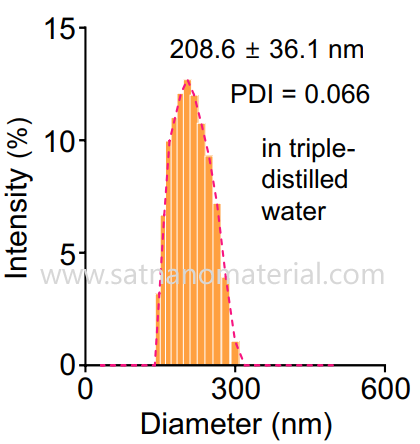
DLS can also provide polydispersity index (PDI), which is a dimensionless parameter for evaluating the width of particle size distribution. It is generally believed that a PDI value below 0.3 indicates good dispersion and uniform particle size distribution of the sample; If the PDI value is greater than 0.7, it means that the sample may have severe agglomeration or extremely uneven particle size distribution.
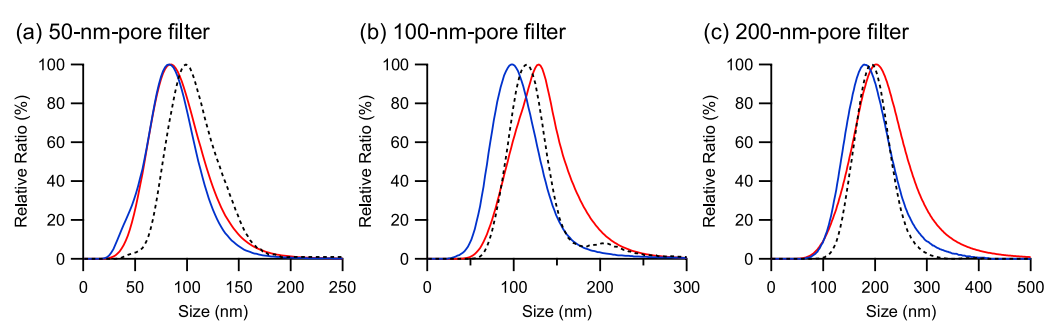
Nanoparticle Tracking Analysis (NTA): NTA tracks and records the Brownian motion trajectory of each particle in the field of view in real time through an optical microscope, and then calculates the size of each particle using the Stokes Einstein equation. Compared to DLS, NTA can provide higher resolution particle size distribution information and directly measure particle concentration, which is particularly advantageous for characterizing polydisperse and complex systems.
2.Morphological and structural characterization
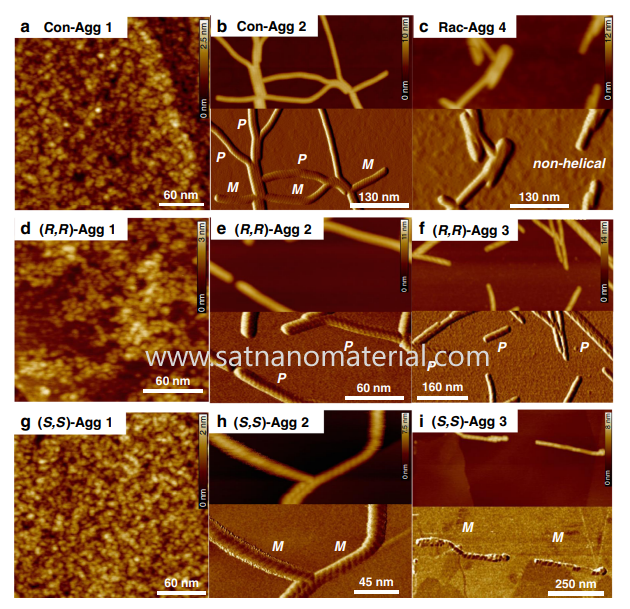
Electron Microscopy (TEM&SEM): Transmission Electron Microscopy (TEM) and Scanning Electron Microscopy (SEM) can provide the most intuitive morphological information of nanoparticles. Through these techniques, researchers can directly observe the size, shape, surface structure, and whether they are in a single dispersed state or forming aggregates of particles. TEM has higher resolution and can even observe the crystal structure of particles. Atomic Force Microscopy (AFM): AFM scans the surface of a sample with a fine probe to obtain three-dimensional morphology images of particles and accurately measure their height and lateral dimensions.
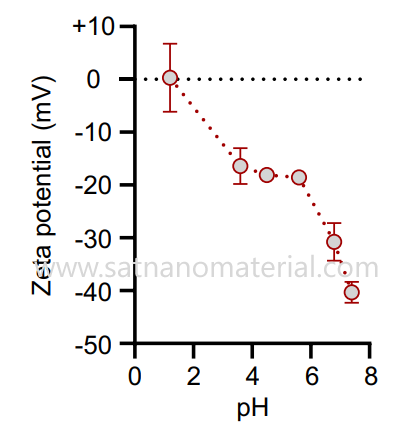
Zeta potential measurement: Zeta potential is a core indicator for evaluating the electrostatic stability of nanoparticles. Calculated by measuring the electrophoretic mobility of particles in an electric field. Generally speaking, there is an empirical relationship between the absolute value of Zeta potential and the stability of the system as follows:
Zeta>60mV: Excellent stability.
Zeta>30mV: Good stability.
Zeta>25mV: The system tends to be unstable and prone to aggregation.
SAT NANO is a best supplier of nano powder and micron particle in China, we can offer metal powder, alloy powder, carbide powder, oxide powder, if you have any enquiry, please feel free to contact us at admin@satnano.com


 online service
 13929258449
 admin@satnano.com
 + 8613929258449


