


CAS 7440-05-3 Pd nanopowder Ultrafine Palladium as catalyst
Size:20-30nm Purity:99.95% CAS No:7440-05-3 ENINEC No.:231-115-6 Appearance:black Powder Shape:spherical

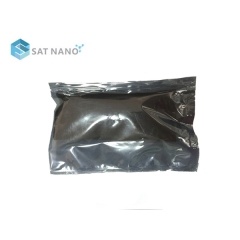
Size:20-30nm Purity:99.95% CAS No:7440-05-3 ENINEC No.:231-115-6 Appearance:black Powder Shape:spherical
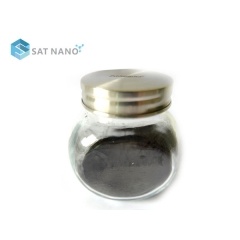
We can supply different size products of niobium silicide powder according to client's requirements. Size:1-3um; Purity:99.5%;Shape:granular CAS No:12034-80-9;ENINEC No.:234-812-3
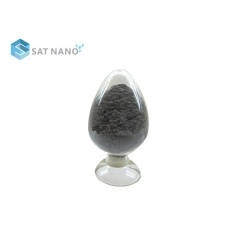
Ni2Si particle,99.5% purity,granular shape,is used for Microelectronic integrated circuit, nickel silicide film,etc. Size:1-10um; CAS No:12059-14-2;ENINEC No.:235-033-1
As an upgraded product of micron silver powder, nano silver powder is widely used in electronic pastes, bioengineering, optical materials, inorganic antibacterial materials, etc. Micron silver powder has great market prospects in high-end silver pastes and conductive coatings. The overall foundation of my country’s micro-nano silver powder industry is good and the development trend is good, but there are also many chaos and excessive hype. As a silver powder production and supply company, we must have the spirit of responsibility and craftsmanship. We are committed to the industry in a down-to-earth manner, and we have the courage to say no to various undesirable phenomena in the industry, and truly shoulder the important task of the development of China's micro-nano silver powder industry. Among all the application fields of silver powder, the largest amount of conductive paste preparation is about 2,000 tons per year. At present, micron-level silver powder is the mainstay. The largest domestic use of nano-silver powder is currently used in medical treatment, green household appliances, and textile appliances. Of antibacterial materials. Facing the needs of enterprises, Hongwu Nano sets up a full-time R&D team to provide customized R&D services for enterprises. The enterprise is responsible for clear application traction and market channels. Both parties build a bridge between technology and industry in the lowest cost and most direct and effective way. This model has four outstanding advantages: one is to provide a clear target traction for technology research and development; the other is to provide a clear market channel for the downstream application and transformation of technological achievements; and the third is to solve the lack of attractiveness of high-end R&D talents. The problem has greatly improved the R&D level of enterprises; the fourth is to reduce the R&D costs of research institutions and enterprises at the same time. Micron silver powder and nano-silver powder are SAT NANO's superior products. We can provide high purity and a variety of different particle sizes for customers to do different kinds of tests. SAT NANO will with a strong spirit of responsibility and craftsmanship, forge ahead, pioneer and innovate, and shoulder the historical responsibility of the development of the micro-nano silver powder industry.
Read MoreSince its establishment, SAT NANO has adhered to the development idea of "specializing, specializing and new", giving full play to the advantages of high-quality refractory metal spherical powder preparation technology, combining upstream and downstream superior resources, evaluating practical effects in application scenarios, and optimizing powders according to industry needs. Material quality. In recent years, SAT NANO has been deeply involved in the medical application of spherical tantalum powder. After in-depth cooperation with many well-known domestic medical equipment industry leaders, it has recently made a breakthrough in low-oxygen spherical tantalum powder (the minimum oxygen content can be less than 100PPM). To achieve good performance. In order to meet customer needs and better serve medical application customers systematically, the company established a spherical tantalum powder medical application division to systematically promote the research and development, production and sales of spherical tantalum powder materials for medical applications. The spherical tantalum powder provided by our company, after optimization of 3D printing parameters, the density of laser-printed pure tantalum can reach 99.4%, and the average hardness is 251.6HV. The tensile fracture modes of pure tantalum specimens are mainly quasi-cleavage fracture mode and cleavage fracture mode, which have good mechanical properties, the tensile strength can reach 706MPa, and the elongation at break can reach 33.26%. In addition, SAT NANO is also actively exploring other applications of spherical tantalum powder in the medical field, such as in tantalum developer (grain size 1um-6um, material purity required to meet medical implant standards, high spherical shape, good dispersion, etc.), and non-metallic The implant's tantalum inserts (particle size 750um-850um, high spherical shape, uniform particle size, and composition in line with implant material requirements) have also made certain breakthroughs. The company adheres to standardized development and has passed ISO9001 quality management system, ISO14001 environmental management system, ISO45001 occupational health and safety management system certification; and ISO13485 medical device quality management system certification, which covers the research and development, production, and production of metal materials (spherical tantalum powder). Sale.
Read MoreZirconium carbide is a hard, high melting point material and an excellent high temperature refractory material. Used as a raw material for solid propellant in rocket motors. Used to produce alloy steel. It is also the raw material for producing metal zirconium and zirconium tetrachloride, as well as promising fine ceramic materials. production method The carbon reduction method uses carbon to reduce zircon in an electric arc furnace to obtain zirconium carbide; in an induction heating vacuum furnace, carbon to reduce zirconium oxide can also produce zirconium carbide. The vapor deposition method zirconium tetrachloride reacts with hydrocarbons in a hydrogen atmosphere at 900-1400°C, and chemical vapor deposition produces zirconium carbide. SAT NANO now uses carbon reduction method to produce zirconium carbide 200 nanometers, with a monthly output of 1 ton. SAT NANO also can supply 50nm, 100nm, 1-5um particle, if you have any enquiry, please feel free to contact us at admin@satnano.com
Read MoreTo All employees of the company: The annual Lunar New Year is already in sight. I wish all the staff a happy New Year and all the best! The specific arrangements for our 2019 holiday are as follows: Spring Festival holiday in 2019 (15 days): January 30, 2019 (Wednesday)---February 12, 2019 (Tuesday); February 13, 2019 (Wednesday) is the day of work. Hereby notice! Precautions for holiday: 1. Before the holiday, please close the doors and windows, turn off the power supply, etc.; do preventive measures against fire and theft, and supervise the implementation of each other to ensure safety and eliminate hidden dangers! 2. During the holidays, colleagues who are traveling or visiting relatives and friends should pay attention to property and personal safety. Return to work on time, if you can‘t return on time due to non-human reasons, please follow the leave request to the competent department in time! To Dear Customers Thanks for your support in 2018. During our holiday, if you have any enquiry or question on our nano powders, please contact admin@satnano.com. Our sales will reply you as soon as possible. We wish all have a great time in New Year holiday! Best Regards SAT NANO
Read MoreRecently, Ren Wencai, a researcher at the Advanced Carbon Materials Research Department of the National Institute of Materials Science, Institute of Materials Science, Chinese Academy of Sciences, has made new progress in the preparation of large-area high-quality uniform single-layer WS2 and flexible electronics applications. Based on binary phase diagram analysis and theoretical calculations, they found that gold is the only metal that does not react with sulfur at high temperatures to form sulfides, and gold has catalytic activity, which can effectively reduce the barrier of tungsten trisulfide vulcanization process, and gold at high temperature. The solubility of the tungsten atom is extremely low. On this basis, they proposed a surface-catalyzed atmospheric pressure CVD method using gold as a growth substrate to realize the preparation of high-quality, uniform single-layer millimeter-sized WS2 single crystals and large-area films. It is found that, similar to the growth of graphene on copper, the catalytic activity of gold and the extremely low solubility of tungsten in gold make the growth of WS2 on gold follow the self-limiting surface catalytic growth mechanism, thus ensuring a uniform single layer of high quality WS2 crystal. Growth. In addition, the single-layer WS2 prepared under normal pressure is weakly bonded to the gold matrix, so the electrochemical bubbling method can be used to achieve high-quality transfer of WS2 without damaging the gold matrix. The single layer WS2 produced by this method has a high crystalline quality and exhibits optical and electrical properties comparable to those prepared by mechanical stripping (far better than materials grown by inert matrix CVD). In addition, they use the characteristics of gold foil with good flexibility and chemical stability, and propose a non-destructive transfer method combining roll-to-roll and electrochemical bubbling to realize large-area single-layer WS2 film without destroying the gold matrix. Low cost continuous transfer to flexible transparent substrates such as PET, PEN, etc. Through the layer transfer, a large-area flexible transparent double-layer, multi-layer WS2 film and a WS2/graphene laminated heterostructure functional film can also be prepared. Using the roll-to-roll electrochemical bubbling lossless transfer method, they also realized the fabrication of a large-area flexible transparent single-layer WS2 thin film transistor array. The electrical properties of the flexible device are comparable to those of the SiO2/Si substrate and are bent. After 100 times, the electrical performance does not decay. The low-cost, large-area preparation of high-quality uniform single-layer WS2 single crystals and thin films lays the material foundation for their applications in flexible electronic/optoelectronic devices and valley electron and spintronic devices. The results were funded by the National Natural Science Foundation of China's Outstanding Youth Fund, major projects, i...
Read MoreNew Year's Day is the beginning of our new year and the first holiday of our new year. The new weather plus the new holiday is a new good mood. Thanks to new and old customers for their support and trust in our company's nano materials. In 2019, our company will work harder to provide customers with better nano powder and services. In accordance with the spirit of the "Notice of the General Office of the State Council on the Arrangement of Some Holidays in 2019", the Group's 2019 New Year's Day holiday arrangements are hereby notified as follows: First, the holiday schedule 1. The company's holiday time is: December 30, 2018, January 1, 2019, 3 days off. On December 29th (Saturday), I will go to work. 2. If there is any change, please notify us. Second, other matters 1. The main person in charge of each department of the group should keep the communication open. In case of major and unexpected events, it should be reported in time and decisively disposed of properly. 2. All departments of the group should arrange vacation shifts, clarify responsibilities, and implement various tasks. The duty officer made a duty record and found the abnormality to report the duty leader in time and deal with it accordingly. 3. All departments should strengthen safety inspections before holidays and implement safety measures such as fire prevention and theft prevention. 4. The issues to be resolved during the holiday period, such as operations and corporate affairs, will be reported to the duty leaders on the day, and the relevant issues will be resolved in a timely manner under the leadership of the duty leader. 5. During the festival, all departments of the group will be on duty to ensure the smooth flow of information. It is hereby notified. SAT nano Technology Material Co., Ltd. SAT nano is elements like Aluminum nanoparticle, Boron nanoparticle, Copper nanoparticle,Nickelnanoparticle, Silver nanoparticle, Tungsten nanoparticle …and the metal oxides like Al2O3, Bi2O3, CuO, SiO2, WO3, ZnO…, nitrides like AlN, BN, Si3N4, TiN…, carbides like B4C, SiC, TiC, WC, TaC… stainless steel powder like 304, 316, 316L, 420… Welcome to ask us a price.
Read More


 online service
 13929258449
 admin@satnano.com
 + 8613929258449