


CAS 7440-05-3 Pd nanopowder Ultrafine Palladium as catalyst
Size:20-30nm Purity:99.95% CAS No:7440-05-3 ENINEC No.:231-115-6 Appearance:black Powder Shape:spherical

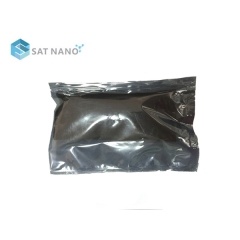
Size:20-30nm Purity:99.95% CAS No:7440-05-3 ENINEC No.:231-115-6 Appearance:black Powder Shape:spherical
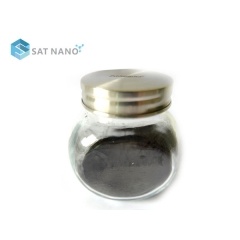
We can supply different size products of niobium silicide powder according to client's requirements. Size:1-3um; Purity:99.5%;Shape:granular CAS No:12034-80-9;ENINEC No.:234-812-3
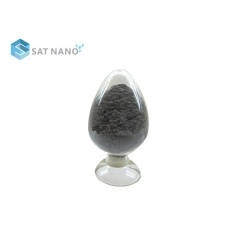
Ni2Si particle,99.5% purity,granular shape,is used for Microelectronic integrated circuit, nickel silicide film,etc. Size:1-10um; CAS No:12059-14-2;ENINEC No.:235-033-1
Rose gold, champagne gold, green gilt, snow silver... These beautiful and shiny "metals" are actually plastic products! The ultra-dispersive color aluminum pigment products developed by the most advanced "nano-micro coating technology" were unveiled at the high-tech fair yesterday. The core technology that makes plastics look beautiful in metallic texture is “nano-micro coating technology”. In layman's terms, it is to put a layer of "clothes" on these pigments so that they can swim in the water like swimming in the water, and the colors are very scattered. The beautiful colors can be achieved. Metal plating is even the same as high-gloss paint, and the variety of aluminum pigments is very rich, including rose gold, champagne gold, bright silver, bright gold, green gold, red gold, blue gold, black gold, bronze, ancient silver and so on. In addition, another highlight of the “paint-free color aluminum pigment” is the world's first “paint-free” technology. Traditional oil-based coatings require multiple processes and are applied to the surface of the product. The “spray-free” technology allows the ultra-dispersive color aluminum pigment to be blended with plastic particles in a certain ratio before entering the blow molding, extrusion or injection molding process, which saves the process, saves energy, and because the pigment is "Fluid" in the material, even if it is bumped, "can not paint." According to reports, the current "free-spraying color aluminum pigment" has been out of the laboratory, industrialized, used in automotive manufacturing, small appliance manufacturing and high-end packaging. "In the future, the main application range of spray-free metal pigment technology is non-metallic parts for automotive interior and exterior body. It can also be applied to computers, mobile phones and home appliances, collectively referred to as 3C appearance parts." The person in charge said, for example, in the field of automobile manufacturing. In the future, the car will have more colors and can even be customized. With the spray-free technology, not only can the complex spraying process be reduced in the process, but the pigment is “melted” in the body. Once the vehicle is paralyzed, there is no need to worry about the problem of the touch up. At the same time, the future car body may also use a large number of spray-free pendants to achieve lightweight, which can reduce the energy consumption of the entire car.
Read MoreIn our daily lives, nanotechnology will bring unexpected surprises to people. With nanometer (nm) coating, the refrigerator can be made into antibacterial, can be made into sterile tableware, can be made into self-cleaning glass and tiles without scrubbing. Using nanotechnology to make a micro drug delivery device, it can accurately reach the lesion site and reduce the adverse reactions of the drug. Nanomaterials are made up of ultra-fine particles of less than 100 nanometers (nm) and are unique in size and function beyond imagination. Nanotechnology is also a "double-edged sword". While bringing convenience to life, it also has potential risks. Environmental ecological risk of nanomaterials Researchers have used nematode model organisms to find that nanomaterials that enter the environment can be transported along the food chain, accumulating in high-level organisms and exhibiting toxic effects. It not only causes damage to the parents, but also damages future generations. In addition, physical, chemical and biological transformations occur when nanomaterials enter the environment, which changes the physicochemical properties and ultimately affects the toxicity of nanomaterials. Studies have found that ionic strength in the environment can dedicate nanosilver to release smaller nanoparticles. This small particle size nanosilver is more toxic than the original nanosilver. The pH in the water environment and the natural organic fulvic acid have similar effects. "Aging" is another major change in the release of nanomaterials into the environment. Nano-zinc oxide undergoes morphological changes and changes in composition during the aging process of the water environment, and flakes appear around the particles. The research team used the latest technology to analyze the physicochemical transformation of nano zinc oxide in the water environment, and found that the newly formed material mainly contains basic zinc carbonate and zinc hydroxide. At the same time, the study also found that the water environment aging process affects the toxicity of nano zinc oxide to chlorella. Researchers say that aging zinc oxide has low toxicity to chlorella, which is due to the physical and chemical transformation of nano-zinc oxide during the aging process of water environment, gradually producing low-toxic basic zinc carbonate and zinc hydroxide, which reduces the small The toxicity of chlorella. Using mammalian cell model studies, it has also been found that the cytotoxicity of nano zinc oxide decreases with aging, but it is surprising that its neurite outgrowth is significantly enhanced. Studies have shown that the transformation of physicochemical properties of nano-zinc oxide with the aging time plays an important role in the induction of mammalian cytotoxic effects. Nanomaterials combined with contaminants can produce complex toxicity Due to the high specific surface area and unique surface chemistry of nanomaterials, when it enters the environment, it can be co...
Read MoreThrough cooperation with domestic research institutes, Chinese companies have created a process oxidation method in the world after several years of trial and error and technological breakthroughs. They have taken the lead in the international production of metal nanomaterials below 10 nanometers, which has caused international industry. highly anticipated. The Chinese company independently researched and developed the photocatalytic net like 'fishing net' with graphene-doped metal nano-titanium dioxide material below 10 nanometers. It has been applied to the domestic black-smelting river water treatment this year. As we know, superparamagnetic nanomaterials below 10 nanometers are an advanced material that is urgently needed in modern medicine, pharmacy, biotechnology and military equipment. However, to achieve mass production of metal nanomaterials below 10 nanometers, the technical difficulty is very high. In the past 10 years, although domestic research institutions have invested in human and financial resources, they have been stuck in the laboratory stage because of the difficulty in research and development. "Currently used centrifugal separation method to screen metal nanomaterials below 10 nanometers is rough, difficult to industrialize, and it is difficult to guarantee accuracy. I have also made it in the laboratory." Dr. Xiu Xiuxi, Pharmaceutical and Environmental Engineering, Changzhou Engineering Vocational and Technical College I told reporters that at present, there are production and application problems in the preparation methods of metal materials below 10 nanometers in the world, such as long production cycle, high cost, difficult to guarantee purity, and troublesome post-processing of products. “Three years ago, we aimed at this global hot spot in materials science and chemistry research, formed a research team with multidisciplinary international experts, and implemented key research projects around the needs of modern medicine and emerging industries, and experienced countless failures. Thousands of repetitive experiments, we finally found a new preparation technology, the world's first ionic liquid anode electro-peeling process oxidation method, successfully produced metal nanomaterials below 10 nanometers." Superparamagnetic below 10 nanometers Nanomaterials have broad application prospects. Among them, the use of the prepared metal nano-titanium dioxide material below 10 nanometers can be applied to the environmental protection field for the treatment of black and odorous river channels. “We have used a photocatalytic net like 'fishing net' made of graphene-doped metal nano-titanium dioxide material below 10 nanometers, which has been applied to black odor river water treatment in Xi'an and Guangzhou. The photocatalytic network is placed in water. As long as there is visible light, it can help break down the organic matter in the water and restore the water body to self-cleaning ability. In addition, the graphene-based ph...
Read MoreFor the first time in the world, the Chinese technical team has reported an ultra-long carbon nanotube tube bundle close to the theoretical strength of a single carbon nanotube, which has a tensile strength that exceeds all other fiber materials found so far. The related results were titled "Carbon nanotube bundles with tensile strength exceeding 80 GPa" and were published online on May 14 in the world's top academic journal "Nature·Nanotechnology". The technicians said that the research team used the airflow focusing method to prepare a centimeter-scale continuous ultra-long carbon nanotube bundle with a certain composition, perfect structure and parallel arrangement, and increased the tensile strength of the tube bundle to above 80 GPa, close to a single carbon nanometer. The tensile strength of the tube and the strength can be maintained as the number of carbon nanotubes increases. "We arrange the super long carbon nanotubes one by one, use special methods to form the corresponding structure and shape, and prove that the macro fiber synthesized by this can maintain the strength of the carbon nanotubes unchanged." The new method of strong carbon nanotube bundles, combined with the macro-preparation method of ultra-long carbon nanotubes, can produce ultra-long and super-strong carbon nanotube fibers, which are one order of magnitude stronger than ordinary carbon fiber materials. Technicians point out that this work reveals the bright future of ultra-long carbon nanotubes for the manufacture of super-strong fibers, while pointing out the direction and method for the development of new super-strong fibers. At present, although the research is still in a partial state, the research team has crossed the theory and created macroscopic fibers, which helps to improve the super-strong materials with a certain production scale, and also lays a foundation for the preparation of a large amount of super-strong materials in the future. Good foundation. Super-strong fibers are expected to show their talents in large aircraft, large-scale launch vehicles, and super-buildings. Reviewer of Nature·Nanotechnology commented: “The author of the paper has made a landmark breakthrough and reported for the first time in the world a bundle of carbon nanotube tubes close to the strength of a single carbon nanotube. This work is extremely Far-reaching influence, it will undoubtedly cause widespread concern around the world." According to research and development personnel, carbon nanotubes are considered to be one of the strongest materials that have been discovered so far, but when a single carbon nanotube with excellent mechanical properties is prepared into a macroscopic material, its performance is often greatly reduced, much lower than Theoretical value. The reason is that the length of the carbon nanotubes is short, and after forming the macroscopic fibers, they are easily broken from the defects under the tensile force and easily slip to each other, resulting in a ...
Read MoreOn October 22, 2018, Xjet officially opened its additive manufacturing center in Rehovot. Covering an area of 8,000 square feet and investing more than $10 million, Rehovot Technology Park is one of the world's largest metal and ceramic 3D printer centers, consisting entirely of the XJet Carmel AM system. The XJet Carmel Series AM system utilizes XJet's patented NanoParticle Jetting (NPJ) technology to create objects by using nanoparticle inks of either material for 3D printing of ceramics and metals. More specifically, XJet's NanoParticle Jetting technology fills liquid suspensions with solid nanoparticles. When the materials are loaded into a 3D printer, they are jetted using a complex nozzle system that deposits ultra-fine ink droplets and support material ink. Go to the build tray. Inside the construction envelope, an extremely high temperature effectively evaporates the liquid suspension of the ink to form a dense layer of ceramic or metal. Finally, once the printing process is complete, the printing components can be sintered and the support material can be removed. Thanks to its unique approach, NPJ technology can produce highly complex parts with ultra-fine details, smooth surfaces and precise accuracy. According to the company, the AM Center aims to support XJet in developing new 3D printed materials and applications. Ceramic samples printed on XJET metal 3D printers, made of silicon oxide and aluminum oxide. This makes the Antarctic bear feel a little surprised: from this it can be seen that its materials can range from metal to ceramic, spanning two major fields. Metal parts printed by XJET metal 3D printer:
Read MoreChinaPeking Universitycooperate with Chinese Academy of Sciencesto use ethanol / methanebychemical vapor deposition method to get ultrahigh-density semiconductor array level of single-walled carbon nanotube. Nowadays, as electronic devices become smaller and smaller, silicon transistors have reached the bottleneck of their development. The horizontal array ofsingle-walled carbon nanotubesis regarded as the most powerful successor of future transistors due to its excellent performance. At present, obtaining high-purity, high-density horizontal arrays of single-walled carbon nanotubes is a major challenge for researchers. Although the direct formation of horizontal arrays ofsingle-walled carbon nanotubeson a substrate by chemical vapor deposition is an effective method for realizing high-performance electronic devices, conventional chemical vapor deposition is extremely active due to the generated methane plasma and ultra-high temperature hydrogen atoms. It is difficult to control, and usually results in a low yield of semiconductor-typecarbon nanotubes. Recently, researchers from Peking University and the Chinese Academy of Sciences reported a ethanol / methane chemical vapor deposition of the scientific method to preparesingle-walled carbon nanotube array level. SWNT horizontal array prepared by the method of a semiconductor single-walled carbon nanotube purity of 91% and a density higher than 100 tubes / μm. This method is at a certain temperature, thermal decomposition of ethanol is completely for Trojan-Mo catalyst to provide a carbon atom to generate a high-densitysingle wall carbon nanotubes; and incomplete thermal decomposition of methane is used to provide the free H base metal to prevent the formation of single-walled carbon nanotubes. Ethanol and methane moderate activity, vital high controllability, and the synergistic effect of both high purity and high-density semiconductor single-walled carbon nanotube growth. The study was a large area of high-densitysingle-walled carbon nanotubesynthesis horizontal array of a step forward, showing the potential applications of carbon nanotube electronics.
Read More


 online service
 13929258449
 admin@satnano.com
 + 8613929258449