


CAS 7440-05-3 Pd nanopowder Ultrafine Palladium as catalyst
Size:20-30nm Purity:99.95% CAS No:7440-05-3 ENINEC No.:231-115-6 Appearance:black Powder Shape:spherical

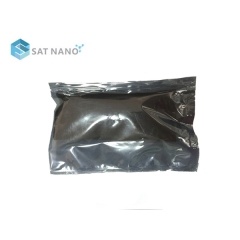
Size:20-30nm Purity:99.95% CAS No:7440-05-3 ENINEC No.:231-115-6 Appearance:black Powder Shape:spherical
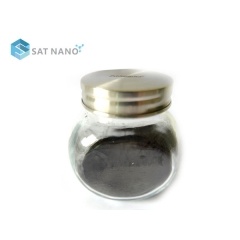
We can supply different size products of niobium silicide powder according to client's requirements. Size:1-3um; Purity:99.5%;Shape:granular CAS No:12034-80-9;ENINEC No.:234-812-3
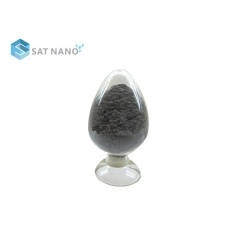
Ni2Si particle,99.5% purity,granular shape,is used for Microelectronic integrated circuit, nickel silicide film,etc. Size:1-10um; CAS No:12059-14-2;ENINEC No.:235-033-1
The development of carbon nanotube water-based thermal printing ink has been successfully developed. This is another new product launched by SAT NANO Co., Ltd. after the carbon nanotube water-based thermal spray coating for consumer electronics cooling. Carbon nanotubes (CNTs) are the most ideal functional fillers for heat dissipation applications. Known as the darkest substance in the world, CNTs is close to 1, and is one of the best thermal materials in the world. Compared with granular heat-dissipating fillers, fibrous CNTs are more likely to form a heat-conducting network in the coating, which has a significant strengthening and toughening effect on the coating, achieving thin coating, reducing thermal resistance, and exerting the best performance. CNTs water-based heat-dissipating coating is formed on the surface of electronic components by spraying. It has uniform heat, low thermal resistance and high thermal radiation coefficient, which enhances heat dissipation of metal substrate. However, due to its small size and light weight, the electronic components in the mobile phone have low production efficiency and high cost. The development of automation equipment, especially the emergence of high-precision automatic screen printing equipment, not only can achieve automatic printing, but also can customize the graphics, accurately control the thickness of the printing coating, precision <1um, which provides a large-scale application of CNTs for mobile phone cooling. feasibility. SAT NANO successfully applied the water-based ink technology to the surface of the metal strip through the silk screen process to coat the surface of the metal strip with CNTs heat-dissipating coating, so that the metal materials such as white copper/stainless steel/tin iron have excellent heat dissipation performance, and the measured emissivity of the coating is greater than 0.98. Focus on level 0, pencil hardness 3-4H, no change in performance after 100 ° C / 200 hours of aging. With the advent of carbon nanotube water-based heat-dissipating inks, heat-dissipating engineers have been able to solve the pain points that cannot be solved by heat-conducting and heat-reducing materials, and have designed subversive products. At present, first-line mobile phone brands have been applied in large quantities in shields and LED backlights, and many brands are designing and verification. The mobile phone/tablet has multiple RF devices and antennas. The electromagnetic waves cause crosstalk to high-speed semiconductor devices such as CPU/DRAM/FLASH. The shield is made of metal (copper white/stainless steel/tinplate) printed with carbon nanotube heat-dissipating ink. The coating emits heat from the heat generated by the electronics under the shield to ensure stable operation of critical components for a long time. The shielding cover printed with the carbon nanotube heat-dissipating ink does not need to open the vent hole to dissipate heat, and the shielding performance is max...
Read MoreAs one of the materials of pencils, ink is not unfamiliar to people. However, in the next decade, the demand for graphite will be as high as several million tons per year. Graphite is the core material of lithium-ion batteries for electric vehicles. The amount of graphite in the anode of the vehicle battery seems to be negligible. However, as American automakers promote electric vehicles, they rely more on the stable supply of graphite, while the Trump administration has imposed 10 on all graphite products imported from China in a new round of Sino-US trade tariffs. % tariff. To this end, China has begun to shut down several important graphite mines, which is not unrelated to the pollution of the industry, unsafe operations, and easy collapse of pits. In fact, with the closure of the mine and regulatory restrictions, China will become the net importer of graphite for the first time. To this end, in the first half of 2018, the price of flake graphite continued to rise. It is worth noting that due to the slight decline in demand for electric vehicle batteries, this is mainly due to the high price of lithium and cobalt, which are the core raw materials for electric vehicle battery. According to a report by Benchmark Minerals Intelligence (BMI), demand for batteries and graphite is expected to increase further in the second half of this year. In addition, BMI expects that by 2028, with the development of the new battery super factory, the capacity increase will reach 860 GWh, which means that during this period, the increase of high-quality flake graphite products will reach 950,000 tons. At present, the annual output of natural graphite is about 1.2 million tons, of which 15-20% of graphite will be used to make electric vehicle batteries. In order to meet the demand for battery anode graphite, an additional 2.5-300 million tons of graphite is required each year. Although the path of growth in demand for electric vehicles seems reasonable, it is currently unable to obtain the required graphite output to drive demand for electric vehicles. So the question is, what happens when the demand for graphite greatly exceeds the current supply? It is now beginning to feel the beginning of the material, and the answer seems clear. SAT nano Technology Material Co., Ltd. supply series of graphite powder with different particle.
Read MoreCarbon nanotubes were first produced in the early 1990s. It‘s as the name suggests -- nanoscale carbon tubes. Although they are thousands of times thinner than human hair, their use is very powerful, and carbon nanotubes have good heat transfer properties. Therefore, researchers have been working on carbon nanotubes, and are investigating the incorporation of carbon nanotubes into 3D printing applications, or 3D printing of carbon nanotubes themselves. Korean researchers are working on 3D printed carbon nanotubes for the development of flexible electronics and wearable technology. The Korea Electrician Research Institute (KERI) has developed a new technology for printing high conductivity, multi-walled carbon nanotubes (MWNTs) using liquid ink 3D. The study was documented in the literature entitled "3D Printing of Highly Conductive Carbon Nanotube Microstructures Using Fluid Inks". Researchers say that pushing printed electronics to three dimensions requires advanced additive manufacturing techniques that produce versatile materials and high spatial resolution. In order to achieve smooth 3D printing without any nozzle clogging, the researchers designed a MWNT ink with a uniformly dispersed polyvinylpyrrolidone winding. According to a team led by Seol Seung-kwon, 3D printing technology can further enhance parts by thermal post-processing to achieve high concentrations of MWNTs - up to 75% of various microstructures. There are many practical applications for 3D printing carbon nanotubes. In the study, the researchers showed several electronic components, including sensors, transmitters, and RF inductors. This technology can also be of great value in the manufacture of wearable electronic products, including flexible electronic packages. “The existing 3D printing technology is very limited in use,” Seol explains. “This latest approach will enhance the versatility of the various components required for 3D printing in making future wearable products, making it wearable. Electronic products open up new possibilities." The researchers added: "We expect that the techniques presented in this study will help select different materials in the 3D printing process and increase the freedom of integration of advanced concept devices. It is reported that the researchers include: Jung Hyun Kim, Sanghyeon Lee, Muhammad Wajahat, Hwakyung Jeong, Won Suk Chang, Hee Jin Jeong, Jong-Ryul Jang, Ji Tae Kim, Seung Kwon Seol.
Read MoreConductive paint is in the varnish by adding silver, copper, nickel or graphite and other conductive powder, so that the paint has conductivity. Commonly varnishes are polyurethane or acrylic lacquers. Dispersion and dispersing agents are often added to reduce the settling rate of the conductive powders and to disperse them well. To prevent oxidation of conductive powder, but also often add anti-oxidants. Commonly conductive powder is nickel powder. The coating process is as follows 1) Surface preparation. If the molded surface is clean, it can be applied directly. If the release agent is used for molding, degreasing should be carried out with an appropriate solvent or degreasing agent. To improve the adhesion of the paint layer, use fine sandpaper to polish the surface. For foam molded parts, degassing should be carried out 72h to prevent paint layer blistering. 2) Priming. For closing the pores of the plastic surface and improving the adhesion of the paint layer, the primer should be primed. This primer should be compatible with the conductive paint to prevent cracking, peeling, swelling and other defects. 3)Deployment of conductive paint. It should be based on the type of plastic substrate and the requirements of the paint to choose the appropriate paint and thinner. Dilution of paint should be fully stirred. 4) Spraying. General lmm nozzle diameter of spray gun for the general, paint viscosity of l4 ~ 16s (with cone disc viscometer, No2 cup measurement). In order to make the conductive powder suspend well, it is necessary to use a pressurized tank equipped with a propeller for stirring. A minimum value shall be specified because the shielding value of the paint layer is related to the thickness of the paint layer. Paint layer should not be too thick, otherwise it will produce nodules and cracks. Generally 40 to 60 μm. 5) spray paint. From the decorative point of view, and often spray a layer of finish. At this point to prevent the topcoat solvent into the conductive paint layer and erosion of the solvent-sensitive plastic matrix.
Read MoreThe first step: wetting stage The gas phase white silica, is slowly added to the barrel, the disperser is low-speed mixing, the speed is about 100-300 rpm, dispersed for 5-10 minutes, after the barrel completely wrapped fumed silica, increase the speed rating , so you can reduce the fume fly problem of fumed silica. The second step: high-speed decentralized phase The speed of the disperser is adjusted to 1500-4500 rpm and the linear speed is 15 m / s -20 / s. According to the speed limit of the disperser itself and the viscosity of the resin itself, adjust and disperse properly for 30-60 minutes. Determine the silica dispersion completely: no particles or white spots, with higher transparency, no fog, no white. Fineness: Fineness meter can be measured. Attention questions: As fumed silica is a nano-scale product. The average primary particle size of 7-16 nm, and the presence of aggregated particle size between 1-2 microns, the Van der Waals force between molecules is relatively large, is the most difficult to disperse an aid, it is proposed to disperse the first white gas Carbon black, appropriate to add dispersant or wetting agent to help disperse, so good dispersion, continue to disperse other additives and fillers, it should be noted that the dispersion process, due to thickening effect of fumed silica, making the dispersion Machine rotation process, resulting in relatively large friction, making the temperature of the resin system or local temperature may appear, so pay attention to the cooling problem, especially the epoxy resin system, the local high temperature easily lead to open ring epoxy, Or carbonization and other issues. Dispersing capacity of high-speed dispersion equipment is relatively limited, fine if the fine, then over three-roll machine, grinding machine, sand mill and so on. The finest can be fumed silica powder dispersed to 0.5 microns or less.
Read MoreFunctional Ceramics Functional Ceramics is knowledge and technology-intensive products. It has found that the oxide conductor, a solid electrolyte, a piezoelectric, a nonlinear optical material, ferrite, memory materials, solar cells, and other high-temperature oxide superconductor. As electronic products to the compact size, versatility, reliability and high surface density and high integration of development, functional materials also has a continuous development. (1) Electrical Insulation Now commonly Al2O3 is used electrical insulating materials at home and abroad. New electronic insulating materials in recent years, such as AlN ceramics, has excellent properties of high strength, high insulation resistance, low dielectric constant, high thermal conductivity, etc., and the coefficient of thermal expansion can be matched with silicon, the main application as LSI and the power module circuit board heat dissipation. (2) a dielectric material For tuning circuits to protect the majority logic and memory unit ceramic capacitor dielectric material is BaTiO3-based materials, in addition to high dielectric composite perovskite materials to develop a frequency of 105Hz, the dielectric constant of the high dielectric material up to 105 currently it appears grain boundary layer capacitors, dielectric constant conventional ceramic capacitor increased several times or even several times. (3) a piezoelectric ceramic material Common piezo elements: sensors, gas ignition, alarm, audio equipment, medical diagnostic equipment and communications. Typically piezoelectric material is PZT, a new type of piezoelectric ceramic materials are: high sensitivity, high stability piezoelectric ceramics, electrostrictive ceramics, pyroelectric ceramic materials. (4) magnetic ceramic material Magnetic ceramic material can be divided into two types of hard magnetic and soft magnetic material, the former is easy magnetization, but also easy to lose magnetism. Representative hard magnetic material ferrite magnets and rare earth magnets, primarily used for magnets and magnetic storage element. Soft magnetic material easy magnetization and demagnetization, the magnetic field direction can be changed in response to an alternating magnetic field is mainly used for electronic components. (5) superconducting ceramic material From the 1980s to study superconducting ceramics has been a major breakthrough for high-temperature superconducting ceramic materials research and application closely watched. Over the last few years, China's research in this area has been in the world's advanced level. Current application of high temperature superconducting material is moving in high-current applications, electronic applications, anti-magnetic and other aspects of development. (6) anti-bactericidal ceramic material Bactericidal anti-ceramic material is a new generation of functional materials with the development of science and social civilization produced. Inorganic anti-microbial fungicide acc...
Read More


 online service
 13929258449
 admin@satnano.com
 + 8613929258449